
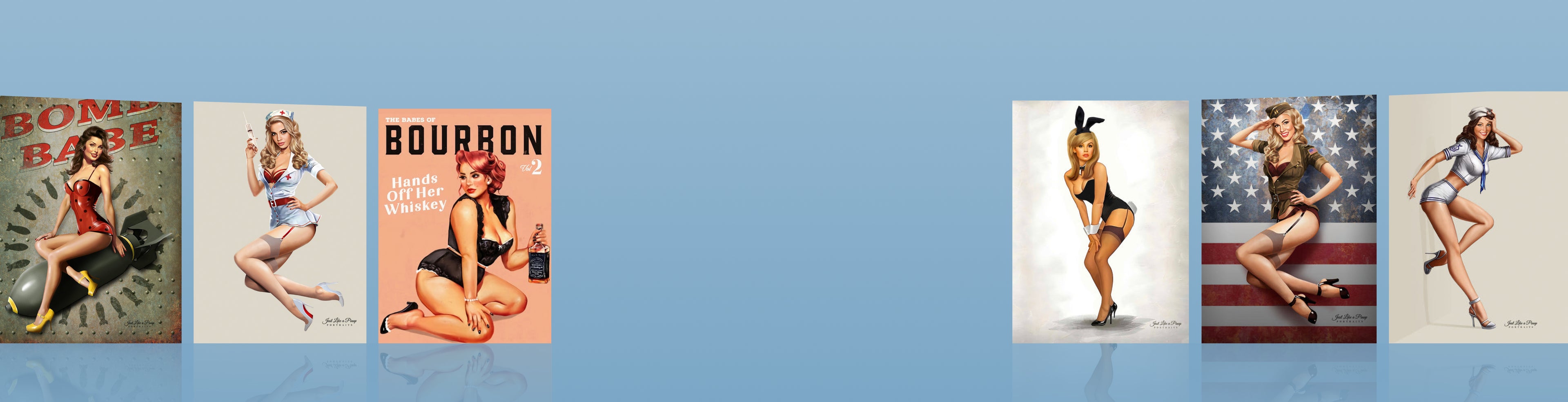
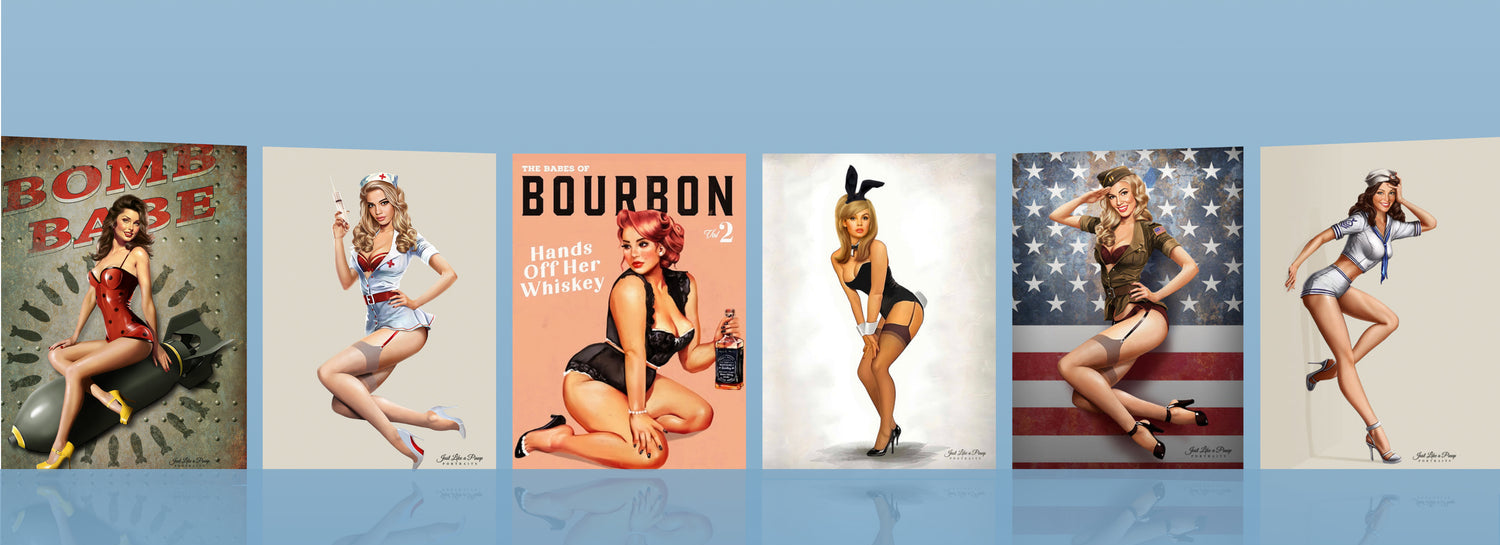
The Evolution Timeline of Pinup Art — 1900s to Present
Pinup art evolved through distinct cultural phases, each shaped by media technology and social change.
In the early 1900s, pinup illustration roots appeared in magazine covers, postcards, and theatrical promotional art. By the 1920s and 1930s, artists like George Petty and early magazine illustrators began defining the modern pinup girl aesthetic—idealized women in playful, posed compositions.
The 1940s and World War II era marked the peak of pinup art distribution, with pinup portraits by Alberto Vargas and Gil Elvgren becoming widely circulated in calendars, magazines, and personal collections. Pinup models like Betty Grable and Rita Hayworth became cultural icons.
In the 1950s and 1960s, pinup illustration transitioned into advertising, television promotion, and commercial branding, softening into more domestic and consumer-focused imagery. By the 1970s and 1980s, it reemerged in tattoo culture and rock music aesthetics.
From the 1990s onward, pinup art was revived through retro fashion, photography, and digital illustration—showing how the pinup portrait style continues to adapt across new media.