
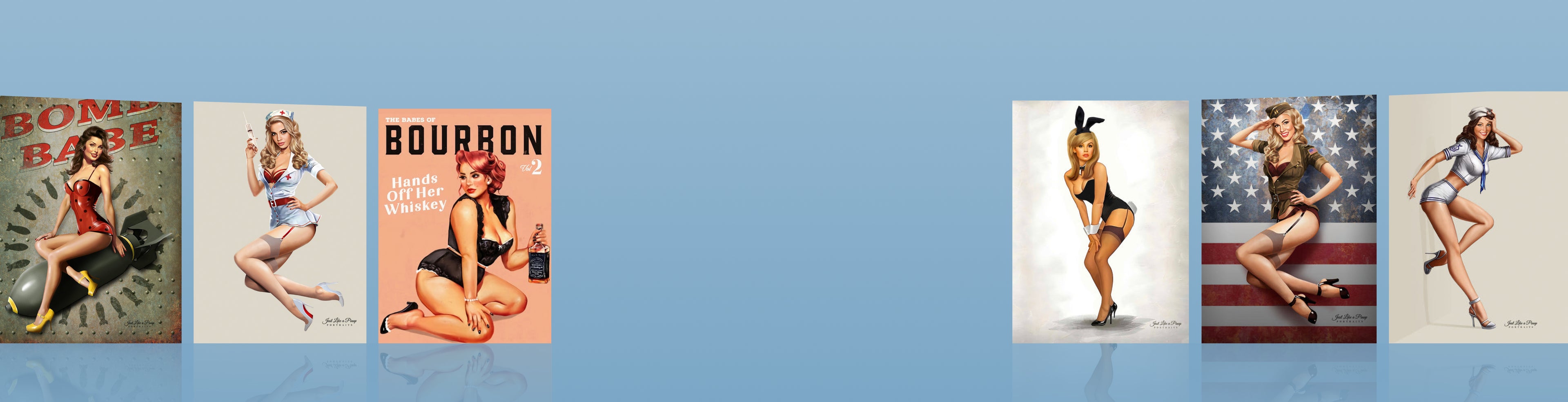
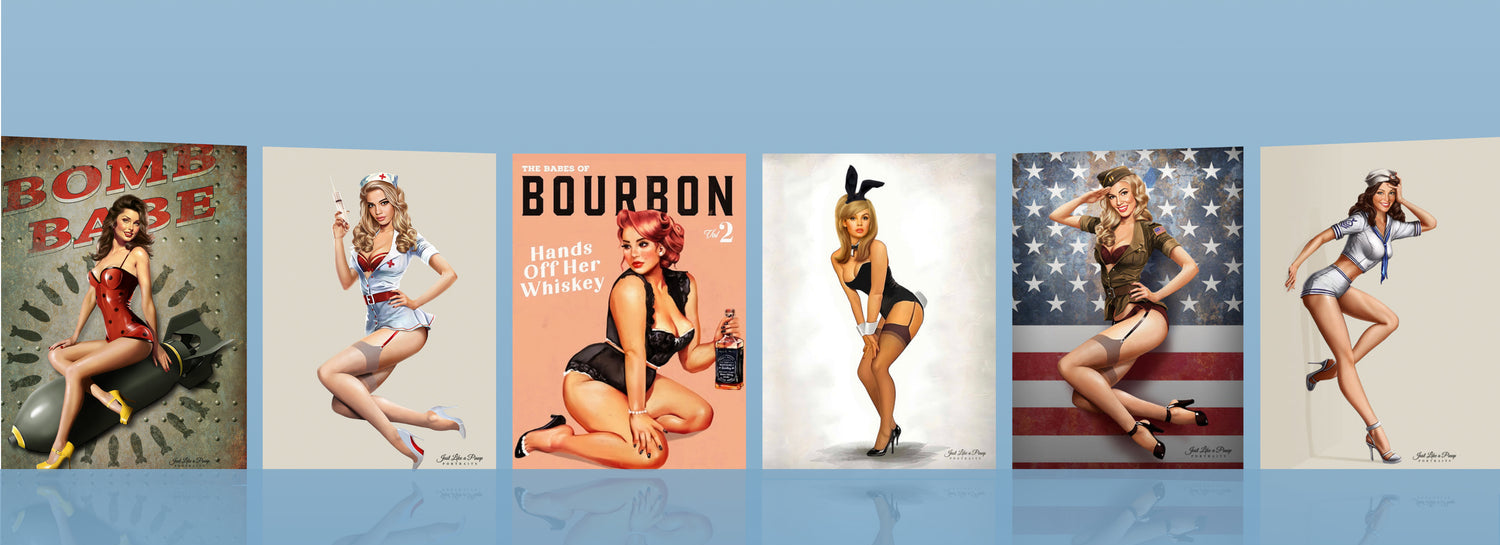

The Golden Age of Pinup Art
The golden age of pinup coincided with the years surrounding World War II, when images of idealized women became symbols of comfort, morale, and escapism. But the artists behind those images were the true architects of the style.
Alberto Vargas – The Master of Glamour
No discussion of pinup art begins without Alberto Vargas. His “Vargas Girls,” published in magazines like Esquire, set the gold standard for elegance and allure.
Vargas perfected a soft, airbrushed technique that made skin appear luminous and almost ethereal. His women were idealized yet approachable—playful expressions paired with impossibly graceful poses. During WWII, his work became a favorite among soldiers, often tucked into lockers and painted onto aircraft.
Gil Elvgren – Playful Storytelling
If Vargas brought glamour, Gil Elvgren brought personality. His pinups often told a story: a dress caught in the wind, an unexpected mishap, or a moment of embarrassment turned charming.
Elvgren’s women were expressive and relatable, capturing candid, almost cinematic moments. His work emphasized movement and narrative, making each image feel like a snapshot from a larger story.
George Petty – The Petty Girl Phenomenon
Before Vargas dominated the scene, George Petty’s “Petty Girls” were already a cultural sensation. Published widely in Esquire, his work featured elongated figures, confident poses, and bold compositions—often against clean, minimal backgrounds.
Petty’s style was less about storytelling and more about presence. His figures commanded attention, helping define the early visual identity of pinup art.
Rolf Armstrong – Color and Classic Beauty
Rolf Armstrong was known for his mastery of color and his ability to capture radiant, smiling faces. His work often leaned toward classic portraiture, emphasizing warmth and vitality.
Armstrong’s pinups felt less mischievous and more timeless, celebrating beauty in a way that bridged fine art and commercial illustration.
Zoe Mozert – A Woman’s Perspective
One of the few prominent female pinup artists of the era, Zoe Mozert brought a unique perspective to the genre. She often used herself as a model, giving her work an authenticity and subtle realism that stood out.
Her pinups balanced sensuality with naturalism, offering a softer, more grounded interpretation of the idealized female form.
Earl Moran – From Pinup to Pop Culture
Earl Moran’s work bridged traditional pinup art and emerging celebrity culture. He is perhaps best known for painting early images of Marilyn Monroe before she became a global icon.
His style blended illustration with a touch of realism, helping transition pinup art into the photography-driven era that followed.
The Evolution of Pinup
While the golden age artists worked primarily with paint and print, their influence extended into photography, advertising, and later digital art. The pinup evolved, but its core elements—confidence, charm, and a hint of fantasy—remained intact.
Modern artists still draw inspiration from these pioneers, whether recreating vintage aesthetics or reinterpreting them for contemporary audiences.
Why These Artists Still Matter
The most iconic pinup artists didn’t just create beautiful images—they defined an era. Their work captured the mood of their time while shaping ideals that still echo today.
Pinup art continues to spark conversation: about beauty standards, empowerment, nostalgia, and representation. And at the heart of that conversation are the artists who first brought these unforgettable figures to life.
From Vargas’s elegance to Elvgren’s storytelling, these artists transformed simple illustrations into cultural icons—images that still feel vibrant, expressive, and unmistakably timeless.