
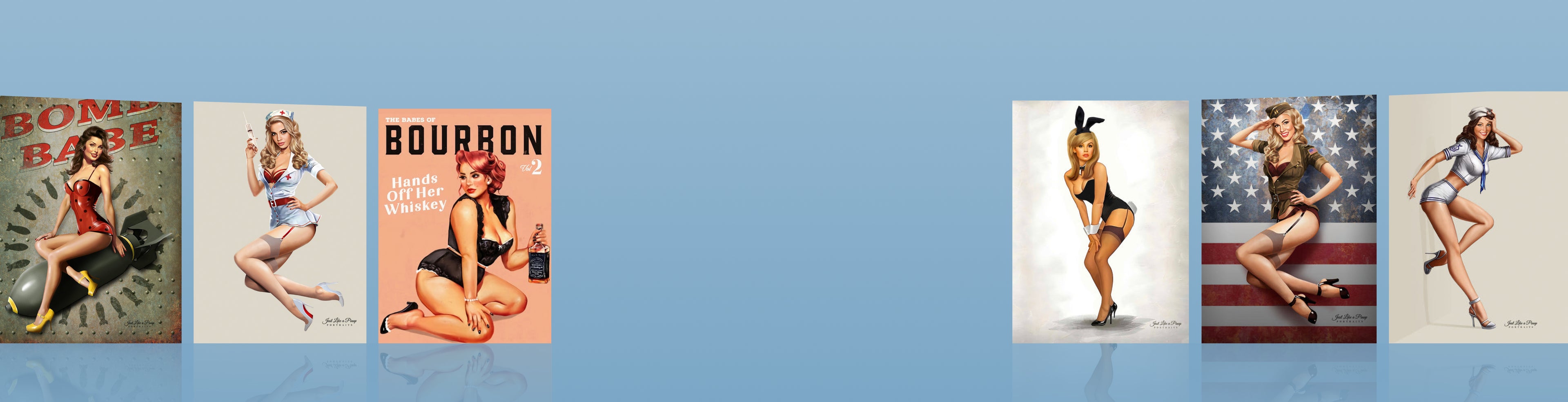
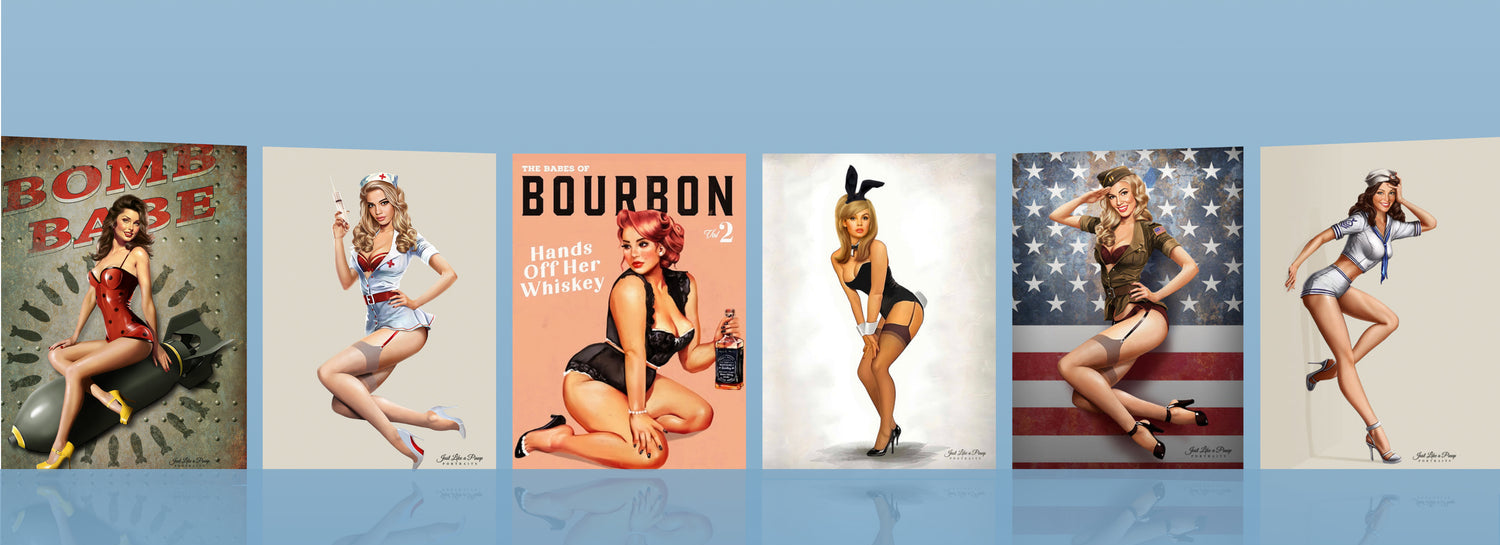

They Were Often Carefully Engineered Illusions
Pinup portraits might look effortless, but they were anything but spontaneous. In the early days—especially during the era of World War II—artists and photographers meticulously planned every detail.
Illustrators like Gil Elvgren would sometimes work from multiple reference photos, combining ideal features into a single “perfect” pose. What looks like a candid moment—like a skirt caught in the wind—was often staged, sketched, and refined repeatedly before the final image.
Many “Painted” Pinups Were Based on Real Models
While pinup art is often associated with painting, many famous illustrations were rooted in photography. Artists like Alberto Vargas frequently used live models or photographic references to achieve realistic proportions and lighting.
In some cases, the final painting was so polished that it erased all signs of the original model’s identity—creating an idealized figure that felt both real and unattainable.
Early Retouching Was Done by Hand
Long before Photoshop, pinup portraits were heavily retouched—just not digitally.
Photographers would physically alter negatives, smooth skin with brushes, or paint directly onto prints. This gave pinups their signature flawless look. Even small details like shine, shadows, and fabric wrinkles were often enhanced manually.
In a way, pinup portraits were early examples of image editing at its most meticulous.
The Poses Were Physically Demanding
Those elegant, effortless poses? They were often uncomfortable to hold.
Pinup models had to maintain exaggerated postures—arched backs, twisted waists, extended limbs—for long periods under hot studio lights. The goal was to create dynamic lines and flattering angles, even if the pose wasn’t natural.
This physical discipline is one reason pinup modeling is often compared to dance or performance.
Expression Was More Important Than Perfection
One of the biggest secrets of a great pinup portrait is that it’s not about having perfect features—it’s about expression.
Models like Betty Page became iconic largely because of their ability to convey personality. A playful smile, a knowing glance, or a look of mock surprise could make an image unforgettable.
Without that emotional connection, even the most technically perfect portrait could feel flat.
Props Were Used to Create Narrative (and Distraction)
Pinup portraits often included everyday objects—phones, chairs, tools, or clothing—not just for visual interest, but to tell a story.
Sometimes, props also served a practical purpose: they helped guide the viewer’s eye or subtly conceal areas of the body while maintaining a sense of modesty. A strategically placed object could suggest far more than it revealed.
“Accidents” Were Usually Planned
One of the most recognizable pinup tropes is the accidental moment: a torn stocking, a slipping strap, or a sudden gust of wind.
In reality, these “oops” moments were almost always intentional. Artists and photographers designed them to create movement, humor, and a sense of spontaneity—while still keeping full control over the composition.
They Influenced More Than Just Art
Pinup portraits didn’t exist in a vacuum. They shaped advertising, fashion, and even military culture. Nose art on WWII aircraft, for example, often borrowed directly from pinup imagery.
They also influenced how femininity and confidence were visually represented for decades—echoes of which still appear in modern photography and media.
The Line Between Empowerment and Objectification Has Always Been Debated
Even during their peak, pinup portraits sparked discussion. Were they empowering expressions of confidence, or were they designed primarily for the male gaze?
The answer has never been simple. For some models and artists, pinup was a form of creative control and self-expression. For others, it reflected the expectations of its time.
That tension is part of what keeps pinup relevant—it invites interpretation rather than offering a single meaning.
Why These Details Matter
Understanding what goes on behind the scenes of pinup portraits changes how you see them. They’re not just images—they’re collaborations between artist, model, and culture.
Every pose, expression, and detail is part of a carefully constructed illusion—one designed to feel effortless, even though it rarely was.
Pinup portraits may look simple at a glance, but the deeper you look, the more you find: technique, intention, and layers of storytelling hidden in plain sight. And maybe that’s the real secret of their lasting appeal—they reward not just a quick look, but a closer one.