
The Soldier’s Pinup – A Love Story from WWII
In 1944, a young American soldier named James Miller boarded a troop transport ship bound for the Pacific. Like thousands of others, he carried very few personal items—his dog tags, a folded letter from home, and a small pinup illustration tucked inside his uniform pocket.
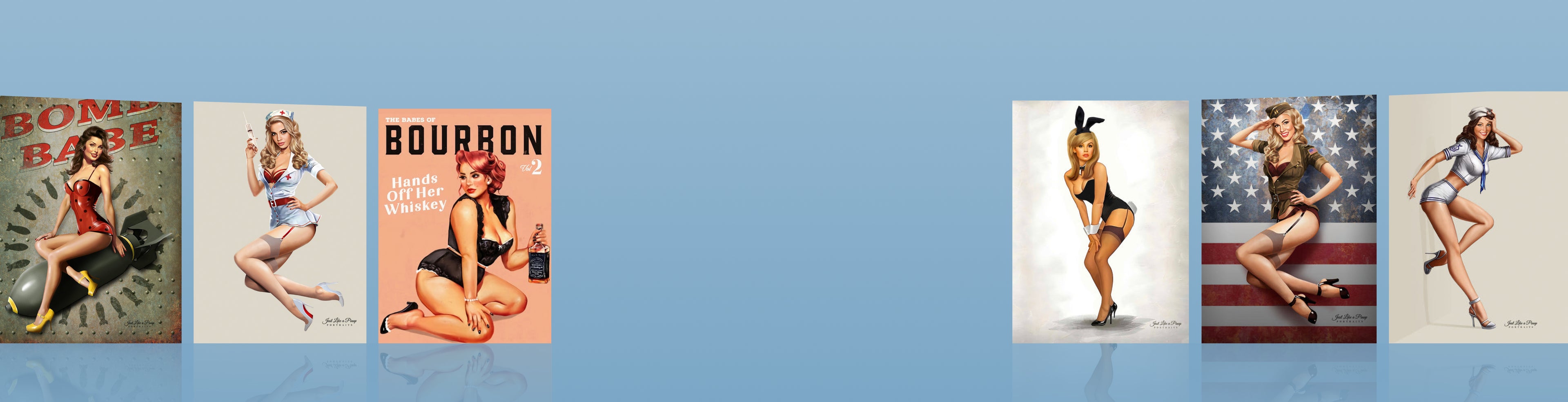
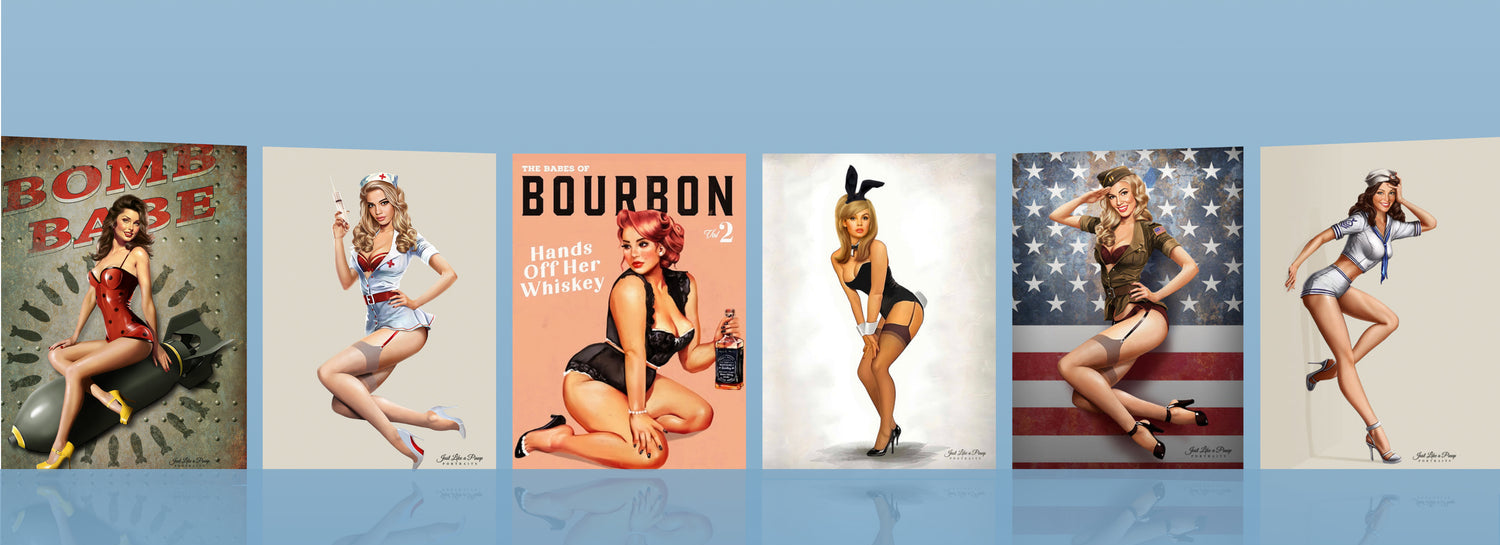
The illustration wasn’t just decoration. It was a custom-style pinup drawing sent by his fiancée, Evelyn, based on a studio photograph she had taken before he left. She had asked a local illustrator to turn her image into a glamorous vintage pinup—soft curls, confident pose, and a handwritten message at the bottom: “Come home safe to me.”
That image traveled with him through islands, battles, and long nights of uncertainty. James later wrote that it wasn’t just about beauty—it was about connection to American life, love, and identity during war.
When he finally returned home in 1945, he kept that pinup framed above his desk for the rest of his life.
Why This Matters to Pinup Art Today
Stories like this are why WWII pinup art became so iconic in American culture. It wasn’t just illustration—it was emotional storytelling.
Today, custom pinup portraits still carry that same meaning: personal identity, memory, and emotional connection turned into art.